
Awkward Sciences: A Call to Action
To understand cultural fragmentation, we need the disciplines imperiled by it.


American culture is being shaped by the erosion of shared narratives, institutions, and reference points, and this is affecting everything from academic freedom to corporate strategy. Central to that story is the rise of human science in industry as the influence of scientists on American public discourse declines. Culture Capitalist began as Human Science during the COVID-19 pandemic and evolved into a way to explore how culture and capitalism impact each other.

Awkward Sciences serves as a launchpad for the Culture Capitalist podcast and revisits our initial mission: building a platform that helps human scientists in industry and academia learn from each other and shape public discourse.
Assault on Paradise
The research that produces the most insight into cultural change often begins as a study of something else. For Conrad Kottak, Assault on Paradise began as a study of class structures in a fishing village in Bahia, Brazil, called Arembepe. He first visited in 1962 as an undergraduate at Columbia University and found a tight-knit community organized around fishing. Arembepe became the site of his dissertation research and much of his work as an anthropologist. He returned repeatedly over decades — 62 years!. This longitudinal approach allowed him to track how technological and economic development generated new class distinctions and demographic diversification.

Kottak applied the same approach to television in Prime Time Society, studying how the medium reshaped cultural life as it spread throughout Brazil. Technology can drive meaningful cultural change, and anthropologists often find themselves positioned to document it and understand how it happens. Their perspectives are attuned to sociotechnical systems, and cultural change is always systemic, even when it happens quickly or what some call “at the speed of culture” nowadays.
This kind of work is crucial for understanding how technology shapes cultural change, from what happens when villagers start adding motors to their fishing boats to how artificial intelligence shapes life with social media today.
Understanding Cultural Change
Assault on Paradise was how I first learned about ethnographic fieldwork, through which a behavioral researcher becomes part of a community to observe, participate in, and document life firsthand. I read it as a freshman at the University of Michigan, where I took Anthropology 101 with Kottak as the instructor for the first half of the course.
He also advised my creation of an individualized major called Semiology of Visual Culture, which I designed to study how film, television, advertising, and the performing arts shape culture and produce meaning. I pursued it just as commercial semiotics was emerging in the UK in the early 2000s.
Kottak’s advisor, Marvin Harris, left Columbia for the University of Florida in 1981 as he emerged as one of the most prominent public intellectuals in the field. Harris was notable for his unflinching alignment with empiricism at a time when postmodernism was gaining ground across the humanities and social sciences. While many of his contemporaries were challenging claims of objectivity, Harris argued that cultural phenomena had material causes, often through books written for general audiences. I did not have the opportunity to meet him, but I continued my studies at UF for graduate school, still learning from his former students and colleagues under the guidance of UF’s department chair, Allan Burns. With his guidance, I was able to pursue my interest in industrial anthropology by studying an unusual topic for my dissertation.
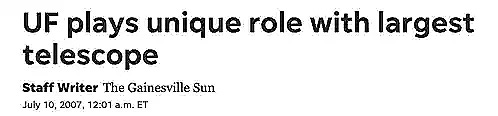
The Thirty Meter Telescope project brought together Caltech, the University of California system, and the astronomical associations of Canada, Japan, China, and India to build a next-generation giant telescope. My work focused on how scientific and social factors shaped the site selection process.
My dissertation research started as a study of how the TMT organization would choose between Mauna Kea in Hawaii and Cerro Armazones in Chile. TMT’s science advisory committee had initially focused on Cerro Armazones, the reference site, but attention eventually shifted to Mauna Kea. This was driven by Mauna Kea’s extremely high scientific value, but also by what some stakeholders saw as an opportunity to introduce a new model for astronomy on Mauna Kea.
The summit of Mauna Kea holds profound significance for some Native Hawaiians as a sacred site. In Hawaiian cosmology, the mountain connects the realm of the living to that of the ancestors and the gods, making it spiritually and politically meaningful. That significance has coexisted uneasily with decades of astronomical development. The first telescope was built near the summit in 1968, and the site eventually grew to house thirteen. TMT’s new approach integrated social innovations, a more collaborative approach with Native Hawaiian groups (than previous astronomy projects), and a multi-million-dollar fund to support STEM education on the Big Island.
The site selection was announced in July 2009, within a few days of the official end of the Great Recession. The economic situation on the Big Island had been severe, and this contributed to the project having unprecedented support within the local community. By the time construction was scheduled to begin in late 2014, a new dynamic was emerging. Younger generations appeared more opposed to the project than the elders who had originally positioned Mauna Kea as a viable option. Short-form and image-based social media also created an alternate reality for many people, especially those learning about TMT for the first time. Celebrities contributed to this, culminating with Dwayne “The Rock” Johnson claiming that the telescope would be the size of a football stadium on The Tonight Show. The media environment had shifted; new forms of organizing, alongside new audiences, had emerged; the economy had improved; and what the telescope meant as a cultural symbol had become as consequential as the scientific work it was designed to help accomplish.
Symbols often have diverse, and sometimes divergent, meanings. What they mean depends on which community is interpreting them and when. To some, TMT symbolizes a new, more equitable approach to astronomy on Mauna Kea and Big Science in general. To others, it represents settler violence against Hawaiians and their sovereign kingdom. Short-form platforms like Twitter, image-based media like Instagram, and social movements like #LandBack have put this multi-billion-dollar Big Science project in uncharted waters, along with the Hawaiian community and the Big Island.
My study of where to build TMT became, unavoidably, a study of how economic, societal, and technological systems drive cultural change. This was precisely what made Assault on Paradise interesting to me as a college freshman. My project would, at the time, have been more difficult to pursue in a department that did not integrate applied anthropology. I transitioned from this research on organizational culture and technology development into applied work as a consultant, moving from Gainesville, Florida, to Brooklyn just as anthropology, ethnography, and design thinking were getting cool.
Anthropology Gets Cool Again
Florida’s universities have had an outsized impact on the social sciences, and researchers often emphasize practical value beyond academia. For example, Harris collaborated with McKinsey and Company in the early 1990s to help establish the McKinsey Global Institute. While the University of Florida combined aspects of an “old guard” department with applied research, the University of South Florida was the first American university to offer an MA and PhD in applied anthropology. Nonetheless, in 2011, Governor Rick Scott declared that Florida did not need more anthropologists and should focus on tech jobs.
That was the same year I began my first project for a major tech company with Tom Maschio through Maschio Consulting on how people use mobile devices. It coincided with another project on cultural mergers and acquisitions with Serena Saitas at REAL Brand Strategy. With Serena, I had the opportunity to work on a project for a client acquiring its biggest rival in a deal that would put them on the Fortune 500. My interest in that topic had emerged just a couple of months earlier after attending a session at the American Anthropological Association’s annual meeting on how evidence of acquired companies remains visible through material culture (artifacts). With Tom, I was able to start working on pioneering Big Tech projects a couple of years before there was a surge of anthropologists joining product teams as UX researchers.
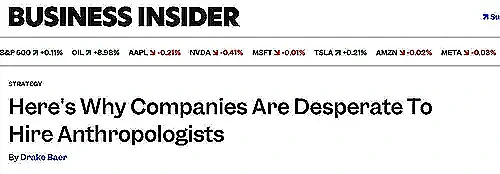
Since then, my work has spanned the subjects I had been interested in since childhood: the evolution of car design, semiotics for media brands, and work for advertising clients that scratched an itch I had since the “Got Milk?” commercials of the 1990s. All of this was made possible by what I had learned at Michigan and Florida.
I went from saying “this is NBC” as my first words and being obsessed with the peacock logo to helping media companies develop culturally relevant strategies.
A New Divide
While my transition from Michigan to Florida had been seamless, there appears to be a meaningful divide emerging now. When UF’s board of trustees unanimously selected Santa Ono for the role of president in 2025, my initial reaction was shaped by something that might seem trivial. Ono was leaving his job as president of the University of Michigan at the time, and his move would have been the first instance in which a sitting Michigan president left to lead a public university in its 200+ year history. He was an unusual prospect, a Japanese Canadian fan of American football. I thought he would have a chance of winning approval from the board of governors if he could talk about football.
The Michigan Wolverines' Cultural Advantage

I wrote this about the Michigan Wolverines’ student-led culture after Team 144 won a national championship.
Ono had been instrumental in Michigan winning a national championship the previous year. His support was crucial in retaining head coach Jim Harbaugh after the team went 2-4 in the 2020 COVID season, a time when much of the fan base was calling for his dismissal. Harbaugh responded by leading Michigan football’s transition to a student-led culture, an approach that essentially revived a model not fully embraced since the early days of American football when the sport was created by college students. This shift led to three consecutive Big Ten championships in 2021, 2022, and 2023. Harbaugh’s time at Michigan ended with a perfect season and a national championship.
UF won two football championships and two basketball titles during my time there, so I knew from experience how a major national championship can benefit a university’s culture. Ono appeared poised to help restore the Gators football program to greatness by taking a special interest in it, just as he had at Michigan.
But the questions he faced tended to focus on ideological alignment, such as how many genders he believed existed and whether he thought climate change was real. This would have been unusual when I was in graduate school at UF. The Florida Board of Governors voted 10 to 6 to reject Ono, the first time in its history it had overturned a trustee selection. While my experiences at Michigan and Florida were very similar, they now appear to be on different trajectories because of cultural change. The difference is even more pronounced across Florida’s other public universities.
Sanitizing Sociology
Beginning in 2023, Florida passed legislation restricting instruction in concepts deemed “unproven, speculative, or exploratory.”
Sociology was removed as a general education option (it’s still an elective). By 2025, the Board of Governors determined that every introductory sociology textbook in use at Florida universities violated state statutes. The new text is 267 pages, cut down from the original 665-page text.
The chapters that were removed cover:
• Deviance, Crime, and Social Control
• Media and Technology
• Social Stratification in the United States
• Global Inequality
• Race and Ethnicity
• Gender, Sex, and Sexuality
If your work covers one of these areas, this project is particularly relevant. Please reach out if you’d like us to discuss and share it, which could be anything from an academic book or an industry research report. We’re starting with Media and Technology.
The textbook has been distributed across the state system, with institutions including Florida State University and Florida International University adopting it. Although all 28 public colleges in Florida’s system are required to use the state curriculum beginning this summer in 2026, the University of Florida has declined to adopt the textbook, treating it as supplemental.
Why Sociology?
What’s happening with sociology may be a sneak peek of what is to come across higher education in Florida. Some might have expected anthropology to be targeted before sociology, since sociology is more easily associated with large datasets, quantitative analysis, and the legacy of the discipline’s founder, Auguste Comte.
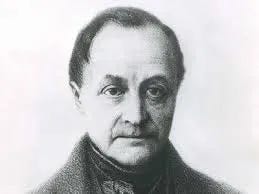
Comte argued that the social world should be studied using the same empirical methods as the natural sciences, what he called positivism. For Comte, human societies were subject to discoverable laws just as the physical world was, and the task of sociology was to identify them. Anthropology is broader in scope, pioneering qualitative methods like ethnography alongside quantitative, archaeological, and biological research.
Florida’s leadership removed most of the textbook because the content is “unproven, speculative, or exploratory,” but they didn’t provide any supporting data, evidence, or examples to explain why they removed what they did.
We’re Here to Help
It is reasonable to question whether sociology has drifted from its scientific foundations. A useful concept for thinking about this is what Karin Knorr Cetina describes as epistemic cultures. She argues that each field develops its own way of producing knowledge, shaped by its history, constraints, and internal norms, and that these frameworks determine what counts as evidence. But these cultures tend to be resistant to change.
So we’ll analyze the material Florida has removed, evaluating both its empirical strength and its relevance to industries beyond academia. We’ll also engage the material directly and openly.
The Call
This project is most useful to organizations that use the social sciences in their work as well as students, faculty, and researchers who are going to be impacted by these changes. We’ll also highlight the work of subject matter experts across industry and academia as we discuss what we can learn from the cultural changes we are seeing in Florida, throughout academia, and across American society now. Subscribe to Culture Capitalist if you are interested in following, or collaborating on, this project.
Awkward Sciences is the start of Culture Capitalist’s exploration of societal change and cultural fragmentation.
Since you made it this far, Culture Capitalist is self-funded and we'd appreciate shares, re-posts, and likes in lieu of paid subscriptions.
By the way, as a bonus, we’ll build this game if this essay gets 1,000 likes.
